
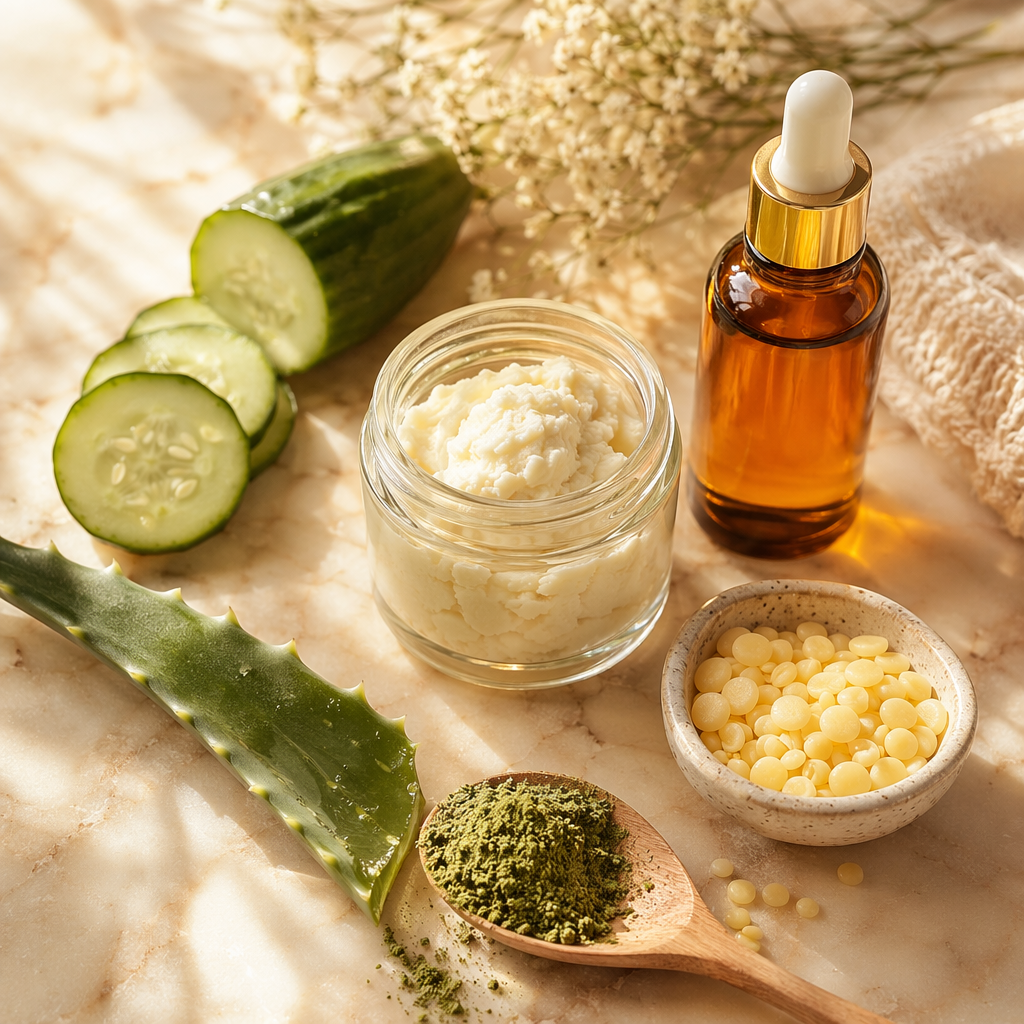
Why Make Your Own Eye Cream?
The skin around your eyes is the thinnest and most delicate on your entire body — it’s only about 0.5 millimeters thick, compared to 2 millimeters on the rest of your face. This means it shows signs of aging, fatigue, and dehydration faster than anywhere else. Yet most commercial eye creams come with a hefty price tag ($30–$80 for a tiny jar) and are loaded with silicones, synthetic fragrances, parabens, and filler ingredients that can actually irritate this sensitive area.
Making your own DIY eye cream at home solves all of these problems. You control every ingredient, you avoid harsh chemicals, you save money, and — best of all — you can customize the formula to target exactly what your under-eye area needs: whether that’s dark circles, puffiness, fine lines, or dryness.
In this tutorial, I’ll walk you through the best natural ingredients for the eye area, share 5 easy DIY eye cream recipes, and give you pro tips for application and storage. Let’s get started.
Understanding the Under-Eye Area
Before mixing ingredients, it helps to understand what you’re working with. The under-eye skin differs from your facial skin in three important ways:
- It’s thinner. With almost no subcutaneous fat and fewer oil glands, the eye area loses moisture rapidly and is more prone to showing blood vessels (dark circles).
- It moves constantly. You blink about 15,000 times a day. All that movement creates fine lines — often the first visible signs of aging.
- It’s more permeable. Ingredients absorb more easily here, which is great for actives — but also means irritants and toxins penetrate faster, too.
This is exactly why a dedicated eye cream (not just your regular face moisturizer) matters. Eye creams are formulated with gentler concentrations and targeted actives specifically chosen for the delicate eye contour.
Best Natural Ingredients for DIY Eye Cream
Here are the powerhouse natural ingredients you’ll want in your DIY eye cream, grouped by what they do best:
Base Oils (Carrier Oils)
- Sweet Almond Oil — Rich in vitamin E and fatty acids; deeply moisturizing and gentle enough for the eye area. Great for all skin types.
- Jojoba Oil — Chemically similar to your skin’s own sebum; absorbs quickly without clogging pores. Perfect for oily or combination skin.
- Rosehip Seed Oil — Packed with vitamin A (natural retinol) and vitamin C; helps fade dark spots and boost collagen. Best for mature or sun-damaged skin.
- Argan Oil — High in vitamin E and essential fatty acids; excellent for very dry, crepey under-eye skin.
Butters and Waxes
- Shea Butter — Ultra-rich moisturizer with natural vitamins A and E; provides a protective barrier that locks in hydration.
- Cocoa Butter — Creates a slightly firmer texture and adds natural antioxidants; best in small amounts as it can be comedogenic.
- Beeswax — Acts as a natural emulsifier and thickener; also forms a breathable protective film on the skin. Use white or yellow beeswax pastilles.
Active Botanicals
- Aloe Vera Gel — Soothes puffiness, cools inflammation, and delivers lightweight hydration. Use fresh or pure gel (avoid green-dyed versions).
- Cucumber Extract — Naturally astringent and cooling; helps reduce morning puffiness and refreshes tired eyes.
- Green Tea Extract (or matcha powder) — High in caffeine and EGCG antioxidants; caffeine constricts blood vessels to reduce dark circles, while antioxidants fight free-radical damage.
- Vitamin E Oil — A potent antioxidant that helps preserve your DIY cream and repairs damaged skin cells. Use pure tocopherol oil, not blended.
- Coffee-Infused Oil — Caffeine-rich and circulation-boosting; excellent for depuffing and brightening the under-eye area.
Essential Oils (Use Sparingly Near Eyes)
- Lavender Essential Oil — Calming, anti-inflammatory, and gentle enough for sensitive skin when properly diluted.
- Frankincense Essential Oil — Known for its skin-tightening and cell-regenerating properties; excellent for mature skin.
- Helichrysum Essential Oil — Often called “liquid gold” for skin; renowned for healing, reducing discoloration, and promoting circulation.
⚠️ Safety Note: Never apply undiluted essential oils near your eyes. Always use at 0.25%–0.5% dilution for the eye area (that’s 1–2 drops per ounce of carrier). If any product gets into your eye, rinse immediately with cool water.
5 DIY Eye Cream Recipes for Every Concern
Recipe 1: The Ultimate Anti-Aging Eye Balm
Best for: Fine lines, crow’s feet, and mature skin
Ingredients:
- 1 tablespoon shea butter
- 1 teaspoon rosehip seed oil
- ½ teaspoon jojoba oil
- ½ teaspoon beeswax pastilles
- 2 drops vitamin E oil
- 1 drop frankincense essential oil
- 1 drop helichrysum essential oil
Instructions:
- Create a double boiler by placing a heat-safe glass measuring cup into a small saucepan with 1–2 inches of simmering water.
- Add the shea butter and beeswax to the glass cup. Stir gently as they melt together (about 3–4 minutes).
- Once fully melted, remove from heat and let cool for 2 minutes.
- Stir in the rosehip seed oil, jojoba oil, and vitamin E oil.
- Add the essential oils last (to preserve their active compounds). Mix thoroughly.
- Pour into a clean, sterilized 1 oz glass jar. Let it set at room temperature for 1–2 hours, or pop it in the fridge for 20 minutes to speed things up.
- The balm will firm up to a buttery consistency — perfect for dabbing onto the eye area with your ring finger.
Use: Apply a rice-grain-sized amount to each under-eye area morning and night. Gently tap — never rub — from the inner corner outward.
Recipe 2: Brightening Cucumber & Aloe Eye Gel
Best for: Dark circles, puffiness, and tired eyes
Ingredients:
- 2 tablespoons pure aloe vera gel
- 1 teaspoon cucumber juice (freshly extracted, strained)
- ½ teaspoon sweet almond oil
- 1 drop vitamin E oil
- ¼ teaspoon green tea extract (or strongly brewed, cooled green tea concentrate)
Instructions:
- Peel and blend a 2-inch piece of cucumber, then strain through a fine-mesh sieve or cheesecloth to extract pure juice. You only need 1 teaspoon.
- In a small, clean bowl, combine the aloe vera gel and cucumber juice. Whisk together until smooth.
- Add the sweet almond oil and vitamin E oil. Whisk again.
- Finally, add the green tea extract and mix until fully incorporated.
- Transfer to a sterilized 1 oz pump bottle or airless jar (this formula is water-based, so an airless container helps prevent contamination).
- Store in the refrigerator. The cooling sensation doubles the depuffing effect!
Use: Roll or pat a small amount under each eye in the morning. Use within 2 weeks (this is a preservative-free water-based formula).
Recipe 3: Nourishing Coffee & Shea Eye Cream
Best for: Puffiness, dark circles, and tired-looking eyes
Ingredients:
- 1 tablespoon shea butter
- 1 teaspoon coffee-infused oil (see note below)
- ½ teaspoon beeswax pastilles
- 2 drops vitamin E oil
- 1 drop lavender essential oil (optional)
How to Make Coffee-Infused Oil: Combine 1 tablespoon of finely ground coffee with 3 tablespoons of sweet almond oil in a small jar. Place the jar in a warm spot (like a sunny windowsill) for 3–5 days, shaking once a day. Strain through a coffee filter or cheesecloth. You now have caffeine-rich oil to use in your eye cream!
Instructions:
- Melt the shea butter and beeswax together using the double-boiler method described in Recipe 1.
- Remove from heat, let cool slightly, then stir in the coffee-infused oil and vitamin E.
- Add lavender essential oil if using, and mix well.
- Pour into a 1 oz glass jar and let it solidify at room temperature.
- The result is a rich, whipped-texture cream that glides on smoothly and smells faintly of coffee and lavender.
Use: Apply a tiny amount in the morning. The caffeine helps constrict blood vessels, visibly reducing puffiness within 15–20 minutes.
Recipe 4: Simple 3-Ingredient Overnight Eye Oil
Best for: Deep overnight repair, very dry under-eyes, and minimalists
Ingredients:
- 1 tablespoon rosehip seed oil
- ½ teaspoon vitamin E oil
- 2 drops frankincense essential oil
Instructions:
- Combine all three ingredients in a small sterilized rollerball bottle (3–5 ml size works best for the eye area).
- Shake gently to blend.
- That’s it — no heating, no waiting. This is the simplest recipe in this guide and one of the most effective for overnight repair.
Use: Roll a thin layer under each eye before bed. The rosehip and vitamin E work together while you sleep to repair, brighten, and hydrate. In the morning, wash your face as usual.
Pro tip: For a luxurious upgrade, pair this overnight eye oil with a few drops of Aida’s Facial Glow Oil on the rest of your face. The botanical blend complements the targeted eye treatment beautifully.
Recipe 5: Whipped Green Tea Eye Cream
Best for: Sensitive skin, redness, and antioxidant protection
Ingredients:
- 2 tablespoons shea butter
- 1 teaspoon matcha green tea powder (ceremonial grade if possible)
- 1 teaspoon jojoba oil
- ½ teaspoon beeswax pastilles
- 2 drops vitamin E oil
- 1 drop helichrysum essential oil (optional)
Instructions:
- Melt the shea butter and beeswax using the double-boiler method.
- Remove from heat and let cool for about 3 minutes — you want it warm but not hot, so the matcha doesn’t degrade.
- Whisk in the matcha powder thoroughly. It should dissolve into the warm oils, giving the mixture a pale green tint.
- Stir in the jojoba oil and vitamin E.
- Add helichrysum essential oil if using.
- Place the mixture in the refrigerator for 10–15 minutes until it starts to firm up but is still soft.
- Use a small whisk or fork to whip the cream until it becomes light and fluffy — about 1–2 minutes of brisk mixing.
- Spoon the whipped cream into a 1 oz jar.
Use: This one is gentle enough for even the most sensitive skin. The matcha delivers a potent dose of EGCG antioxidants that protect against environmental damage throughout the day. Apply morning and night.
How to Apply Eye Cream Correctly
Even the best DIY eye cream won’t work if you apply it wrong. Follow these steps for maximum results:
- Use your ring finger. It’s your weakest finger, which means you’ll naturally apply the lightest pressure — exactly what the delicate eye area needs.
- Take a rice-grain-sized amount. More is not better here. Using too much product can cause milia (tiny white bumps) or migrate into your eyes overnight.
- Dot, then tap. Place tiny dots along the orbital bone (the bony ridge under your eye), starting from the inner corner and moving outward. Then gently tap — never rub or drag — until absorbed.
- Include the brow bone. The eye area includes the upper lid and brow bone, not just the under-eye. Tap any remaining product along the brow bone for a natural mini-lift.
- Wait before makeup. Give your eye cream 2–3 minutes to fully absorb before applying concealer or foundation to prevent creasing.
- Morning vs. Night: Use lighter gel-based formulas (like Recipe 2) in the morning under makeup. Save richer balms and oils (Recipes 1, 3, and 4) for your nighttime routine.
Storage and Shelf Life
Since these recipes are preservative-free, proper storage is essential:
- Oil-based balms (Recipes 1, 3, 4, 5): Store in a cool, dark place. They’ll last 3–6 months. Vitamin E acts as a natural preservative and helps extend shelf life.
- Water-based gels (Recipe 2): Must be refrigerated and used within 2 weeks. Without a broad-spectrum preservative, water-based formulas are prone to bacterial growth.
- Always use clean, dry fingers to scoop out product. Never introduce water into the jar.
- Sterilize your containers before use: boil glass jars for 5 minutes or wipe with 70% isopropyl alcohol and let dry completely.
- Signs a recipe has gone bad: Changes in color, texture, or smell. When in doubt, throw it out and make a fresh batch.
Common Mistakes to Avoid
- Using too much essential oil. The eye area is hypersensitive. Stick to 1 drop per tablespoon of carrier — no exceptions.
- Applying too close to the lash line. Product migrates as it warms up. Apply along the orbital bone and let your body heat naturally spread it.
- Rubbing instead of tapping. Rubbing stretches the skin and accelerates fine lines over time.
- Skipping the patch test. Always test a new recipe on your inner wrist or behind your ear 24 hours before using it near your eyes.
- Storing in direct sunlight or a hot bathroom. Heat and UV light degrade natural oils and botanicals. Keep products in a cabinet or drawer.
Frequently Asked Questions
Can I use my DIY eye cream on my eyelids?
Yes, but with extreme care. Use an even smaller amount and apply only along the brow bone. Product will naturally migrate downward. Avoid applying directly to the mobile eyelid, especially with oil-based formulas, as they can blur vision if they get into the eye.
How long does it take to see results?
Hydration results are immediate — you’ll notice softer, smoother skin right away. For dark circles and fine lines, give it 2–4 weeks of consistent daily use. The under-eye area regenerates slowly, so patience is key.
Can I use coconut oil instead of the carrier oils listed?
Coconut oil is comedogenic (pore-clogging) for many people and can cause milia around the eyes. If you tolerate coconut oil well, you can substitute it, but the lighter oils (jojoba, sweet almond, rosehip) are safer bets for the delicate eye area.
Is DIY eye cream safe for sensitive skin?
Absolutely — that’s one of the biggest advantages of making your own. You can skip fragrance, dyes, and preservatives entirely. Start with Recipe 4 (the 3-ingredient oil) as it has the fewest potential irritants. Always patch test first.
Will these recipes help with genetic dark circles?
Topical eye creams cannot fully erase dark circles caused by genetics (where the skin is naturally thinner and shows blood vessels). However, ingredients like caffeine (Recipe 3) and vitamin C-rich rosehip oil (Recipe 1) can help minimize their appearance by thickening the skin over time and brightening pigmentation.
Recommended Products for Your Skincare Routine
While you’re treating the delicate eye area with your homemade eye cream, don’t forget the rest of your skin! Pair your DIY eye treatment with Aida’s all-natural, handcrafted botanical skincare products for a complete head-to-toe glow:
- Aida Facial Glow Oil — A lightweight, fast-absorbing facial oil packed with botanical extracts that nourish, brighten, and balance your complexion. Perfect after applying your DIY eye cream for a full evening skincare ritual.
- Aida Body Glow Oil — Give the rest of your skin the same luxurious treatment. This silky body oil absorbs instantly and leaves your skin with a healthy, radiant sheen — never greasy.
- Aida Smoothing Body Butter — If you love the rich, whipped texture of homemade shea butter creams, you’ll adore this whipped body butter. Deeply moisturizing with natural butters and oils, it’s the perfect complement to your eye care routine.
All Aida products are 100% vegan, cruelty-free, and handcrafted in small batches with pure botanical ingredients.
Final Thoughts
Making your own DIY eye cream is one of the most satisfying steps you can take in a natural skincare journey. The ingredients are simple, the process takes less than 15 minutes per batch, and the results speak for themselves: hydrated, brighter, and healthier-looking under-eyes — without the $60 price tag or mystery chemicals.
Start with the recipe that best matches your skin concern, master the gentle tapping application technique, and give it a few weeks of consistent use. Your eyes do so much for you every day — give them a little love back.
Have you tried making your own eye cream? Which recipe are you most excited to try first? Let us know in the comments!