
DIY Body Scrubs from Kitchen Ingredients: 4 Recipes That Actually Work
Commercial body scrubs can cost a small fortune — and when you flip the label, you’ll often find a cocktail of microplastics, synthetic fragrances, and preservatives that your skin really doesn’t need. The better news? Everything you need for a genuinely luxurious body scrub is probably already sitting in your kitchen pantry.
Homemade body scrubs give you full control over what goes on your skin: no fillers, no questionable chemicals, no plastic waste. Just real, recognisable ingredients that exfoliate, nourish, and leave your skin genuinely glowing. In this guide, we’re sharing four tried-and-tested DIY body scrub recipes — each one takes under 10 minutes to make and delivers results you can feel immediately.
Why Make Your Own Body Scrub?
Beyond the obvious cost savings, DIY body scrubs offer something most store-bought products simply can’t: freshness, transparency, and a ritual that’s entirely your own. Here’s why it’s worth the five minutes it takes:
- Pennies per batch — A single jar costs a fraction of even the most budget supermarket scrub.
- Clean ingredients only — No parabens, sulfates, mineral oils, or synthetic fragrance.
- Fully customisable — Adjust the texture, scent, and ingredients to suit your skin type and mood.
- Zero plastic waste — Decant into reusable glass jars and feel good about it.
- You know exactly what’s in it — And exactly when it was made.
When you pair a freshly made scrub with a high-quality finishing oil like the AIDA Body Glow Oil, the results are even more noticeable. Exfoliation removes the dead skin barrier so that nourishing botanicals can absorb more deeply and work more effectively. It’s a simple ritual upgrade that makes a real difference.
Your DIY Body Scrub Ingredient Guide
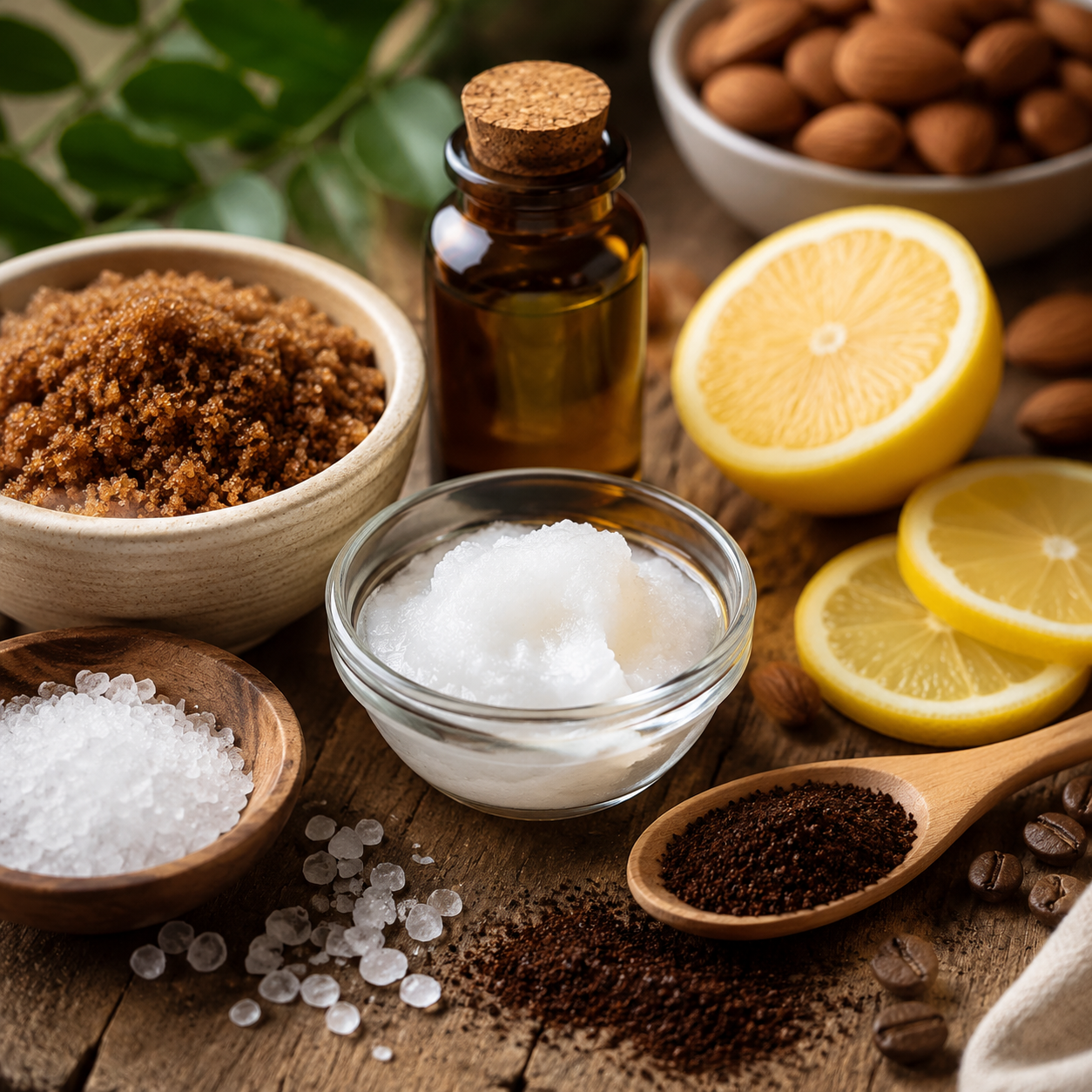
Before you start mixing, it helps to understand what each ingredient actually does. These are the kitchen staples that earn their place in any homemade scrub:
| Ingredient | Role in the Scrub | Best For |
|---|---|---|
| Coconut Oil | Moisturising base oil | All skin types, especially dry skin |
| Brown Sugar | Gentle exfoliant | Sensitive skin, face and body |
| White Sugar | Moderate exfoliant | General body exfoliation |
| Sea Salt | Coarse exfoliant, mineral-rich | Rough areas — feet, elbows, knees |
| Ground Coffee | Exfoliant + caffeine stimulation | Cellulite-prone areas, tired-looking skin |
| Finely Ground Oats | Ultra-gentle exfoliant + calming | Sensitive, dry, or irritated skin |
| Olive Oil | Rich moisturising base | Very dry or mature skin |
| Honey | Humectant — draws moisture into the skin | All skin types |
| Lemon Juice | Brightening + antibacterial | Oily skin (use sparingly) |
| Essential Oils | Scent + targeted skin benefits | As preferred — lavender, peppermint, rosehip |
4 DIY Body Scrub Recipes Using Kitchen Ingredients
Recipe 1: Brown Sugar and Coconut Oil Scrub — Gentle and Deeply Hydrating
Best for: All skin types, especially dry or sensitive skin
Yield: 1 cup · Time: 5 minutes · Shelf life: 3–4 weeks
What You’ll Need
- 1 cup brown sugar, lightly packed
- ½ cup coconut oil, melted but not hot
- 1 tablespoon raw honey (optional)
- 10 drops vanilla extract (optional, for a warm, comforting scent)
How to Make It
- Combine the brown sugar and melted coconut oil in a mixing bowl.
- Stir with a fork until the mixture has a wet sand texture — it should clump slightly when pressed.
- Add the honey and vanilla extract if using, and mix until fully incorporated.
- Spoon into a clean, airtight glass jar.
- To use: scoop a generous amount onto damp skin and massage in slow circular motions for 2–3 minutes. Rinse thoroughly with warm water and pat dry.
Why it works: Brown sugar granules are naturally rounded, which makes them far gentler on skin than coarser alternatives. Coconut oil melts on contact with warm skin, delivering deep moisture as you scrub, while honey acts as a humectant — locking that hydration in. This is the ideal starter scrub if you’re new to making your own skincare.
Pro tip: After rinsing, while your skin is still slightly damp, apply a few drops of the AIDA Body Glow Oil and press it in gently. The combination leaves skin looking luminous and feeling genuinely silky — not greasy.
Recipe 2: Coffee and Coconut Body Scrub — Energising and Firming
Best for: Cellulite-prone areas, morning showers, dull or fatigued-looking skin
Yield: 1½ cups · Time: 5 minutes · Shelf life: 3–4 weeks
What You’ll Need
- ½ cup finely ground coffee (used grounds are perfectly fine)
- ½ cup brown sugar
- ½ cup coconut oil, melted
- 1 teaspoon ground cinnamon (optional — helps stimulate circulation)
How to Make It
- Combine the coffee grounds and brown sugar in a bowl and mix well.
- Pour in the melted coconut oil and stir until everything is evenly coated.
- Add cinnamon if using and give it a final mix.
- Transfer to a jar with a tight-fitting lid.
- To use: massage into damp skin using firm, upward strokes — focus on the thighs, buttocks, upper arms, and anywhere that tends to feel congested. Let the scrub sit for 3–5 minutes before rinsing. This gives the caffeine time to absorb.
Why it works: Caffeine is a well-researched vasodilator — it temporarily constricts blood vessels and helps improve circulation, which is why coffee scrubs are so popular for tackling the appearance of cellulite. The coarse texture of coffee grounds provides deep exfoliation, while coconut oil leaves skin soft and conditioned. Use it in the morning and you’ll notice the difference immediately.
Recipe 3: Oatmeal and Honey Calming Scrub — For Sensitive and Reactive Skin
Best for: Sensitive, dry, irritated, or eczema-prone skin
Yield: ¾ cup · Time: 5 minutes · Shelf life: Use immediately
What You’ll Need
- ½ cup rolled oats, finely ground into a powder (use a blender or food processor)
- ¼ cup plain full-fat yoghurt, unsweetened
- 2 tablespoons raw honey
- 1 tablespoon olive oil
How to Make It
- Blitz the rolled oats in a blender or food processor until they become a fine, flour-like powder. This is your colloidal oat base.
- In a bowl, combine the oat powder, yoghurt, honey, and olive oil.
- Stir until you get a smooth, spreadable paste — it should feel creamy, not grainy.
- Use straight away. Because this recipe contains yoghurt, it doesn’t keep well and should be made fresh each time.
- To use: apply to damp skin and massage very gently for 1–2 minutes. Rinse with lukewarm (not hot) water, then pat dry with a soft towel. Never rub — your skin is already doing the hard work.
Why it works: Oats contain avenanthramides — naturally occurring compounds with well-documented anti-inflammatory and skin-calming properties. This is why dermatologists so frequently recommend oat-based products for reactive skin conditions. Combined with the probiotic benefits of yoghurt and the moisture-sealing power of honey, this scrub soothes as it refines. It’s gentle enough to use on the body and on more delicate areas like the décolletage.
Pro tip: After gently patting dry, apply the AIDA Smoothing Body Butter while your skin is still slightly warm from the shower. On freshly exfoliated skin, it absorbs beautifully and provides lasting, non-greasy hydration — ideal for anyone prone to dryness or tightness.
Recipe 4: Sea Salt and Citrus Energising Scrub — Deep Exfoliation for Rough Patches
Best for: Rough, thickened skin on the feet, elbows, and knees; normal to oily skin
Yield: 1 cup · Time: 5–7 minutes · Shelf life: 3–4 weeks
What You’ll Need
- ½ cup fine sea salt (not coarse — coarse salt can be too abrasive on most skin)
- ¼ cup olive oil or sweet almond oil
- Zest of 1 lemon (freshly grated)
- 1 tablespoon fresh lemon juice
- 10 drops of your preferred essential oil (peppermint and grapefruit work beautifully here)
How to Make It
- Combine the sea salt and oil in a bowl and mix until the salt is evenly coated.
- Add the lemon zest and lemon juice and stir well.
- Drop in your chosen essential oil and mix through.
- Transfer to a sealed glass jar and store away from direct sunlight.
- To use: scoop onto damp skin and work into rough patches using firm circular motions. Spend extra time on heels, elbows, and knees. Rinse thoroughly — lemon juice can make skin photosensitive, so avoid sun exposure immediately after use or reserve this scrub for evening showers.
Why it works: Sea salt is naturally mineral-rich — it contains magnesium, potassium, and calcium, which help support the skin’s moisture barrier while the coarser texture lifts away stubborn dead skin. Lemon provides natural alpha hydroxy acid (AHA) action for brightening, and the citrus scent alone makes this one of the most invigorating scrubs to use. One note: because of the lemon, this isn’t recommended for sensitive skin or freshly shaved areas.
How to Store Your Homemade Body Scrubs
Getting the storage right is the difference between a scrub that stays fresh for weeks and one that deteriorates quickly. A few simple rules:
- Always use glass jars. Wide-mouth mason jars or recycled jam jars are perfect. Avoid plastic — oils can degrade certain plastics over time.
- Keep water out. Introducing water into your scrub will cause it to spoil much faster. Use a dry spoon or spatula every time you scoop.
- Store in a cool, dark place. A bathroom cupboard is fine; a sunny windowsill is not.
- Label with the date. Oil-based scrubs (without dairy) last 3–4 weeks. Fresh scrubs containing yoghurt or juice should be used within 24 hours.
- Check before you use. If it smells off or changes colour significantly, make a fresh batch.
How to Get the Most from Your Exfoliation Routine
The scrub is just the beginning. How you care for your skin before and after makes a significant difference to the results you see over time.
Before You Scrub
Always apply scrubs to damp, pre-warmed skin — a few minutes in a warm shower is ideal. The warmth opens pores and softens the skin’s surface, which means the exfoliant can work more efficiently without needing excessive pressure.
During Application
Use gentle to medium pressure and slow, circular motions. The goal is to encourage cell turnover, not to strip or irritate. Never scrub broken, sunburnt, or inflamed skin.
After You Rinse
This is where the ritual really pays off. Freshly exfoliated skin absorbs everything more readily — so what you apply in those first few minutes after rinsing matters. Pat (don’t rub) dry with a soft towel, then reach for a quality finishing product while your skin is still slightly warm.
The AIDA Body Glow Oil is particularly effective here — its botanical blend absorbs quickly, delivers lasting hydration, and gives skin a healthy, natural radiance that you simply can’t achieve on unexfoliated skin. For drier skin types or cooler months, follow with the AIDA Smoothing Body Butter to seal in moisture and keep skin soft all day.
How Often Should You Exfoliate?
For most skin types, two to three times per week is the sweet spot. More than that — especially with coarser scrubs like the sea salt recipe — can disrupt your skin’s natural barrier. Sensitive skin types should aim for once a week and always opt for the oatmeal or brown sugar recipes.
Frequently Asked Questions
Can I use these body scrub recipes on my face?
The oatmeal and honey scrub is gentle enough for most face skin types, but use a very light touch and avoid the eye area. The coffee and sea salt recipes are too coarse for facial use and are best kept to the body only. For facial exfoliation, a dedicated product formulated for face skin — like the AIDA Facial Glow Oil used as part of a gentle cleansing routine — will give you more controlled results.
Can I use these scrubs if I have eczema or psoriasis?
The oatmeal and honey recipe is often suitable for eczema-prone skin, but always patch test first and consult your dermatologist if you’re managing a skin condition. Avoid any recipe containing lemon juice or essential oils on actively flared or broken skin.
Why does my coconut oil scrub go hard in cold weather?
Coconut oil solidifies below around 24°C — this is completely normal and doesn’t affect the quality of your scrub. Simply scoop out what you need and let it warm between your hands before applying, or keep the jar somewhere slightly warmer like a bathroom cabinet.
Are DIY scrubs safe during pregnancy?
Sugar and oat-based scrubs are generally considered safe, but certain essential oils are not recommended during pregnancy. Always check with your midwife or GP before using essential-oil-containing scrubs, and err on the side of fragrance-free recipes during the first trimester.
A Final Word on Natural Skincare
There’s something genuinely satisfying about mixing a scrub in your kitchen, knowing exactly what’s in it, and watching your skin respond to ingredients that have been used in beauty rituals for centuries. DIY body scrubs are a small act of self-care that costs very little but delivers a lot — smoother texture, better circulation, and that particular glow that only comes from skin that’s been properly looked after.
Pair your scrub routine with botanical-quality finishing products and you’ll start to see compounding results over time. The AIDA Body Glow Oil and Smoothing Body Butter are designed to work in exactly this way — as the second step in a ritual that begins with exfoliation and ends with deeply nourished, visibly radiant skin.
Start with whichever recipe feels most suited to your skin right now. You can always experiment from there.
“`